 Ars Occulta
 / Ars Goetia / Dantalion
71 / 72
Dantalion
Dantalian
- Rank
- Duke
- Planet
- ♀Venus
- Legions
- 36

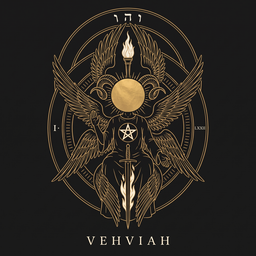
Innumerable faces of men and women pass in succession over the head of Dantalion, who holds a book in his right hand. No verifiable historical antecedent is known for him. He occupies the grade of Duke, tied to Venus, with thirty-six legions. His powers are among the broadest in the catalogue: he teaches all arts and sciences, declares the secret counsel of anyone, changes thoughts and hearts, and shows the likeness of any person. In practice he was invoked in order to know what another is thinking and to alter it, which makes him the spirit of influence over another's will.
He does not exist before the seventeenth century
Dantalion does not appear in Johann Weyer's catalogue of 1577, the oldest surviving list, which reaches sixty-nine spirits. Nor in Scot's English translation of 1584, nor in the Livre des Esperitz, nor in the published lists of the Liber Officiorum Spirituum. The modern editor of the text notes it in three words: not found in Weyer.
He is one of the four the Lemegeton added to reach seventy-two. The other three are Vassago, Seere and Andromalius. None of them has any witness earlier than the seventeenth century.
Which means there is no genealogy to trace: no biblical root, no divine antecedent, no etymology. The derivations in circulation are modern proposals with nothing behind them. Dantalion is born fully formed, in an English manuscript.
Reading the thought and changing it
His three offices are civil, not supernatural in the spectacular sense. First: to declare the secret counsel of anyone — that is, to know what the other party is planning before they say it. In the sixteenth and seventeenth centuries that is intelligence work: lawsuits, negotiations, court intrigue, knowing a decision before it is announced.
Second, and more unsettling: he knows the thoughts of all men and women, and can change them at his will. Read and rewrite.
Third: he causes love, and shows by vision the likeness of any person, wherever in the world they are. Forced love and seeing the absent: exactly the pair of requests that turns up most often in the witchcraft trials of the period.
The many faces
He appears as a man with many countenances, all men's and women's faces, and with a book in his right hand.
The book explains itself within the catalogue: it is the attribute of the spirit who teaches arts and sciences. The faces, on the other hand, have no gloss. There is no bestiary, no emblem, no period treatise that ties that attribute to this spirit. The Renaissance convention of Proteus as a figure of inconstancy exists, but no source applies it here.
It is worth saying rather than filling in: Dantalion's most memorable feature is also the only one nobody ever explained.
His thirty-six legions and his rank of duke are the same in every manuscript. The name varies little: Dantalion, Dantaylion, Dantalian.
Sources
- Lemegeton Clavicula Salomonis · Ars Goetia — ms. Sloane 2731 y 3825, ed. Peterson; Mathers, 1904
- Johann Weyer, Pseudomonarchia Daemonum, 1577 — 69 espíritus, sin Dantalion
- Reginald Scot, The Discoverie of Witchcraft, 1584
- Livre des Esperitz, siglos XV-XVI — sin correspondencia
- Liber Officiorum Spirituum — sin correspondencia en las listas publicadas
Other dukes of the Goetia
The hyperrealistic reconstruction of Dantalion and those of the other 143 entities are published on Instagram as they are completed. See Dantalion on Instagram →
WarningHistorical and artistic content. We do not recommend performing any ritual, invocation or practice involving these entities. This is outreach about texts from the 15th to the 20th century, not an operative guide.