 Ars Occulta
 / Ars Goetia / Gremory
56 / 72
Gremory
Gamori, Gomory
- Rank
- Duke
- Planet
- ♀Venus
- Legions
- 26

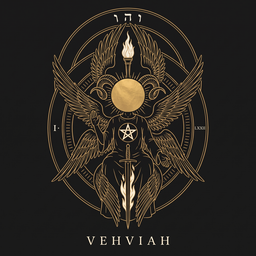
Under the spellings Gamori and Gomory, the text describes a woman of great beauty riding a camel, with the ducal crown worn about her waist rather than on her head. No documented historical antecedent exists for the name. Her rank is that of Duke, which the grimoire links to Venus, with twenty-six legions under her command. She was invoked for three specific ends: knowledge of past, present and future, the location of hidden treasure, and the love of women, young or old. In recent popular culture her name resurfaces as a surname in the Japanese series High School DxD.
Her entry is the list of offences
Gremory does two things: she tells where hidden treasure lies, and she procures the love of women, young and old. Exactly those two, in that order.
They are, word for word, the two behaviours named in the English Witchcraft Act of 1541. The statute forbids using invocations or conjurations of spirits «to the intent to find money or treasure», and the same practices «to provoke any person to unlawful love».
It is not coincidence or irony: the entry describes the real use of practical magic. Finding what was buried and forcing an affection were the two ordinary commissions, so ordinary that Parliament named them. Scot narrows the clientele further: he says she procures the love of women, «especially of maids», which in that period means marriage and dowry.
The crown at the waist
She appears as a beautiful woman riding a great camel, with a duchess's coronet tied about her middle. That detail catches everyone's attention, and there is a possible explanation that is not symbolic but philological: the modern editors Skinner and Rankine propose that the Latin cingitur was mistranslated, and that the crown should be bound about the head, not the waist.
If so, the strangest image in the catalogue would be another copying error. It is worth saying plainly what it is: a proposal of textual criticism, not a datum of the manuscript.
Of the camel there is no period gloss explaining it for her. What was available in 1600: Isidore reports that the camel kneels to be loaded, hence its reading as the animal of submission; Isaiah describes the caravan of camels bringing gold; and in Genesis it is the ten camels of Abraham's servant that go to find Isaac a wife. Treasure arriving from far away, and marriage negotiation. The two things she does.
Where the sources disagree
Starting with the name. Weyer writes Gomory, with no r. The Sloane 3648 manuscript writes Gremory; Sloane 2731 writes Gemory. Gamori and Gemon also circulate. The r appears in a single branch of copying.
And the legions go out of true more than in almost any other entry: twenty-six in Weyer, in the Lemegeton and in the Dictionnaire Infernal; twenty-seven in the Munich Manual; and five or forty-two in the Liber Officiorum Spirituum, which contradicts itself inside the same manuscript.
She moves place: fifty-first in Weyer, fifty-sixth in the Lemegeton. And there is a detail the whole tradition keeps without explaining: she appears in the form of a woman and the text refers to her in the masculine.
Sources
- Lemegeton Clavicula Salomonis · Ars Goetia — ms. Sloane 2731 y 3648, ed. Peterson; Mathers, 1904
- Johann Weyer, Pseudomonarchia Daemonum, 1577 — «Gomory»
- Reginald Scot, The Discoverie of Witchcraft, 1584 — «especiallie of maids»
- Witchcraft Act, 1541 (33 Hen. VIII c. 8)
- Isidoro de Sevilla, Etymologiae XII.1.35 — el camello
- Isaías 60:6 · Génesis 24
- Stephen Skinner y David Rankine, The Goetia of Dr Rudd, 2007 — la lectura de «cingitur»
Other dukes of the Goetia
The hyperrealistic reconstruction of Gremory and those of the other 143 entities are published on Instagram as they are completed. See Gremory on Instagram →
WarningHistorical and artistic content. We do not recommend performing any ritual, invocation or practice involving these entities. This is outreach about texts from the 15th to the 20th century, not an operative guide.