 Ars Occulta
 / Ars Goetia / Vapula
60 / 72
Vapula
Naphula, Napula
- Rank
- Duke
- Planet
- ♀Venus
- Legions
- 36

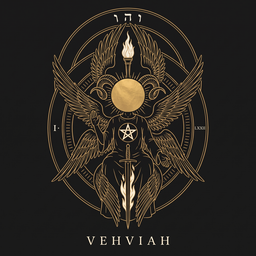
A winged lion with the plumage of a griffin: the description of Vapula, also Naphula or Napula, is among the tersest in the catalogue. No historical antecedent is known for him either. He figures as a Duke, a grade the text links to Venus, with thirty-six legions in his charge. His speciality is neither divination nor love but technical competence: he makes men skilful and wise in handicrafts, professions, philosophy and the sciences. He was, in practical terms, the spirit of applied learning, sought by anyone who wanted to master a particular trade. The manuscript attributes to him no deceit and no particular danger.
What he was asked for
Knowledge without having learned. Weyer puts it better than the Lemegeton: he makes a man subtle and wonderful in handicrafts, in philosophy and in «sciences contained in books».
That had a concrete value. The trades were closed by guilds that demanded years of apprenticeship before letting you work, and the university was for very few. The shortcut has a documented name: the Ars Notoria, a tradition of rituals for obtaining memory, eloquence and the liberal arts at a stroke, copied from the thirteenth century onward and eventually folded in as one of the parts of the Lemegeton itself. Vapula is the demonic version of that same impatience.
A griffin missing half of itself
He appears as a lion with a griffin's wings, and there is an oddity here the text does not remark on. Isidore of Seville defines the griffin as an animal that is lion in every part of its body, and eagle in wings and head. Vapula keeps the wings and keeps the lion's head: an unfinished griffin. A monster by subtraction, not by addition.
The griffin, besides, was not just a heraldic ornament. Isidore classes it among the beasts of prey and says it tears men apart; Pliny, the first to describe them with wings, has them nesting on the ground on nuggets of gold. Hence its best-known role: the griffin is the guardian of treasure. A guardian of knowledge wearing the wings of the guardian of gold.
No period source explains why the eagle's head was taken away. It is a gap, and it is worth saying it is a gap.
Where the sources disagree
Almost nowhere, and that is rare. Weyer, in 1577, gives him the same rank, the same thirty-six legions and the same form. The only difference of content is that Weyer is specific — sciences from books, mechanics — where the Lemegeton generalises to philosophy and other sciences.
The alternative name, Naphula, appears only in the Lemegeton; Weyer and Scot write Vapula alone. And there is no historical antecedent for either: no biblical root, no Talmudic one, no Persian one. The resemblance to the Latin vapulare, «to be flogged», is accidental and no period source proposes it.
Sources
- Lemegeton Clavicula Salomonis · Ars Goetia — ms. Sloane 2731 y edición Mathers, 1904
- Johann Weyer, Pseudomonarchia Daemonum, 1577 — «sciences conteined in bookes»
- Reginald Scot, The Discoverie of Witchcraft, 1584
- Isidoro de Sevilla, Etymologiae XII.2.17 — definición del grifo
- Plinio el Viejo, Naturalis Historia, siglo I — grifos alados y el oro
- Ars Notoria, tradición manuscrita desde el siglo XIII
Other dukes of the Goetia
The hyperrealistic reconstruction of Vapula and those of the other 143 entities are published on Instagram as they are completed. See Vapula on Instagram →
WarningHistorical and artistic content. We do not recommend performing any ritual, invocation or practice involving these entities. This is outreach about texts from the 15th to the 20th century, not an operative guide.