 Ars Occulta
 / Ars Goetia / Seere
70 / 72
Seere
Sear, Seir
- Rank
- Prince
- Planet
- ♃Jupiter
- Legions
- 26

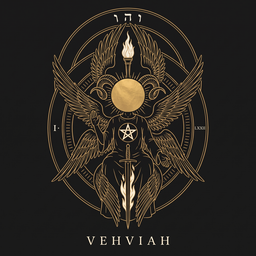
A rider of great beauty on a winged horse, Seere, written also Sear or Seir, stands out for his speed: he comes and goes in the twinkling of an eye and brings things from any place. No etymology should be asserted, since the graphic coincidence with biblical place names is not documented as an origin. The text gives him the grade of Prince, which it associates with Jupiter, and twenty-six legions. He was charged with recovering objects, uncovering thefts and locating hidden treasure, tasks of carriage and finding rather than of knowledge. The manuscript stresses something uncommon: he is of a good nature and does no harm to the one who calls him.
The only one who arrives on something heroic
Almost the whole catalogue presents itself on beasts: crocodiles, wolves, dragons, camels. Seere arrives as a beautiful man riding a strong winged horse, and that image had a fixed and positive meaning in 1600.
The emblem was in print and circulating in dozens of editions: Alciato, in his emblem book of 1531, puts Bellerophon on Pegasus under the motto «by counsel and by valour». The text says that, borne on Pegasus' wings, the hero seeks the heavens and tames proud monsters by the counsel of the mind.
So the winged horse is not a diabolical mount. It is speed, ascent and the rational mastery of the monster. Seere is one of the few in the catalogue whose picture points upward.
Speed, and the usual crime
His office is to go and come, to bring things to pass on a sudden, to carry and re-carry anything wherever he is told. He can cross the whole earth in the twinkling of an eye.
And then the other part: he gives a true relation of all sorts of theft, and of treasure hid. These are, word for word, the two behaviours named in the English act of 1542, which punishes conjuring spirits «to the intent to find money or treasure» and to «tell or declare where goods stolen or lost shall become».
The text adds that he is of an indifferent good nature and willing to do anything the exorcist desires. In a catalogue where half the entries come with warnings, protocols and triangles, Seere is the easy one.
He is not in Weyer
Seere does not appear in Johann Weyer's catalogue of 1577, which reaches sixty-nine spirits, nor in Scot's English translation of 1584. Nor in the Livre des Esperitz.
The arithmetic of how seventy-two was reached is more entertaining than it looks. Weyer published sixty-nine, although his own text says there are seventy-two. The Lemegeton added four who were not there — Vassago, Seere, Dantalion and Andromalius — and dropped one who was, Pruflas. Sixty-nine, minus one, plus four: seventy-two. The round number in the title was obtained by adjustment.
The modern editor notes where Seere may have come from: another manuscript, Sloane 3824. And on his name there is nothing firm. The form Seir coincides with the biblical Seir, the land of Edom, but no source asserts it.
Sources
- Lemegeton Clavicula Salomonis · Ars Goetia — ms. Sloane, ed. Peterson; Mathers, 1904
- Johann Weyer, Pseudomonarchia Daemonum, 1577 — 69 espíritus, sin Seere
- Witchcraft Act, 1542 (33 Hen. VIII c. 8)
- Andrea Alciato, Emblematum liber, 1531 — emblema «Consilio et virtute»
- Sloane MS 3824 — posible fuente de la entrada, según Joseph Peterson
Other princes of the Goetia
The hyperrealistic reconstruction of Seere and those of the other 143 entities are published on Instagram as they are completed. See Seere on Instagram →
WarningHistorical and artistic content. We do not recommend performing any ritual, invocation or practice involving these entities. This is outreach about texts from the 15th to the 20th century, not an operative guide.