 Ars Occulta
 / Ars Goetia / Stolas
36 / 72
Stolas
Stolos, Solas
- Rank
- Prince
- Planet
- ♃Jupiter
- Legions
- 26

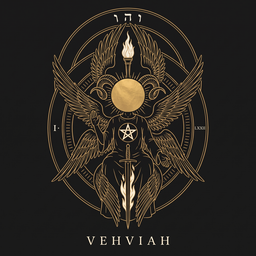
The iconography that made Stolas popular, a crowned, long-legged owl, postdates the grimoire, which speaks instead of a mighty raven standing before the exorcist; of the name, Stolos or Solas, no verifiable etymology exists. The text makes him a Great Prince, a grade of Jupiter, with twenty-six legions. His teaching is twofold and very concrete: astronomy on one side, the virtues of herbs and precious stones on the other; heaven and matter, the two halves of Renaissance natural magic. The operator who called him worked with celestial charts and a herbal, not with armies.
The raven is a copying error
Stolas is drawn today as an owl or as a raven depending on which edition you open, and the reason is documented. Weyer, in 1577, writes nycticorax, «night raven», which in the vocabulary of the period is not a corvid but a bird of the night; Scot's English translation renders it night raven. The Sloane manuscripts misread those two words and wrote mighty raven. From then on, half the editions draw him as a raven.
The modern editor of the text, Joseph Peterson, records the variants one by one: Weyer has night, the manuscripts have mighty, and one of them not even that — it writes miaghty. You can watch the error happening.
And the crowned, long-legged owl, which is his most widespread image, is not in the grimoire either: it is Louis Le Breton's engraving for the Dictionnaire Infernal of 1863.
Herbs and stones is not poetry
The text says he teaches astronomy and «the virtues of herbs and precious stones». That phrase is not ornament: it is the name of a publishing genre that existed and sold.
The Book of Secrets attributed to Albertus Magnus, printed in English from the middle of the sixteenth century, is titled exactly that — «of the virtues of herbs, stones and certain beasts». Before it came the lapidaries, such as Marbode of Rennes' Liber lapidum, from around 1090, copied endlessly throughout the Middle Ages, rooted in book 37 of Pliny's Natural History.
And astronomy, in 1600, was not separate from practical astrology. What was asked of him was concrete: which stone or which herb serves for what, and under which sky to use it.
About the series
Many people reach this name through Helluva Boss. The series takes the owl, the title of prince and the astronomy, and adds a grimoire in his hands.
That book is not his. In the catalogue, the spirit who appears with a book in his right hand is Dantalion, the seventy-first. The manuscript puts nothing in Stolas' hands.
Of the name, incidentally, there is no documented etymology. He also appears as Stolus, and as Distolas in the Livre des Esperitz.
Sources
- Lemegeton Clavicula Salomonis · Ars Goetia — ms. Sloane 2731 y 3825, ed. Peterson; Mathers, 1904
- Johann Weyer, Pseudomonarchia Daemonum, 1577 — «nycticorax»
- Reginald Scot, The Discoverie of Witchcraft, 1584 — «a nightraven»
- Pseudo-Alberto Magno, Book of Secrets — ediciones inglesas desde c. 1550
- Marbodo de Rennes, Liber lapidum, c. 1090
- Plinio el Viejo, Naturalis Historia, libro 37
- Collin de Plancy, Dictionnaire Infernal, 1863 — grabado de Louis Le Breton
Other princes of the Goetia
The hyperrealistic reconstruction of Stolas and those of the other 143 entities are published on Instagram as they are completed. See Stolas on Instagram →
WarningHistorical and artistic content. We do not recommend performing any ritual, invocation or practice involving these entities. This is outreach about texts from the 15th to the 20th century, not an operative guide.