 Ars Occulta
 / Ars Goetia / Phenex
37 / 72
Phenex
Phoenix, Pheynix
- Rank
- Marquis
- Planet
- ☽Moon
- Legions
- 20

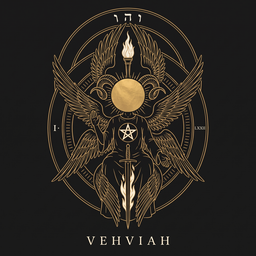
The name comes straight from the phoenix, the bird Greco-Roman tradition describes as reborn from its own ashes; the manuscript keeps the image untranslated. He holds the rank of Great Marquis, a grade the grimoire assigns to the Moon, and commands twenty legions: a middling command, tied more to speech than to force. The operator summons him for what he can say, since he speaks admirably of every science and composes excellent poetry, so instruction and verse are what one asks of him. The text adds two cautions: do not answer his childlike song until he takes the shape of a man, and he expects to return to the Seventh Throne after twelve hundred years.
He sings, and you must not listen
The entry carries a strange and very specific instruction: he arrives in the form of a phoenix with a child's voice, sings many sweet notes before the exorcist, and the exorcist must not heed him. He must at once command him to take human shape.
Only then does he speak, and he speaks marvellously of all wonderful sciences. He is, the text says, an excellent poet, and willing to do what is asked.
The warning is Weyer's own, from 1577: care must be taken that neither the exorcist nor his companions lend their ears to the sweetness of the song. The whole catalogue is full of spirits dangerous for what they do; this one is dangerous for how he sounds.
Twelve hundred more years
Here is the detail that makes this entry unique. Phenex hopes to return to the seventh throne after twelve hundred more years, and the Lemegeton adds one touch: so he told Solomon.
That term already appears in Weyer, with the same figures. And it is theologically uncomfortable. Scholastic doctrine holds that the demon's will was fixed irreversibly at the moment of the fall: no repentance is possible, no term, no return. The idea of a universal restitution, of everything eventually coming back to its place, had been condemned centuries earlier.
The grimoire puts into a demon's mouth a hope orthodoxy expressly denies him. And it does so without comment. It is one of the places where you can see that these texts are not theology manuals but something else: operators' literature, with rules of its own.
The bird, and what was believed about it
The phoenix was not a vague metaphor to a reader in 1600 but an entry in natural history. Pliny, in Philemon Holland's English translation of 1601, says there is never more than one in the whole world, that it lives six hundred and sixty years, that it builds its nest from twigs of cinnamon and frankincense, and that from its bones and marrow there first breeds a kind of worm which afterwards proves to be a bird. Holland, incidentally, distrusts the phoenix exhibited in Rome under Claudius: he calls it a counterfeit.
Isidore adds the part everybody remembers: that with a beating of its wings it deliberately kindles a fire for itself and rises again from its own ashes. In the bestiaries the phoenix is the resurrection of the just; in sixteenth-century emblem books it is a device of uniqueness and rebirth, and it became a badge of Elizabeth I of England.
Rank of marquis and twenty legions in the Lemegeton, in Weyer, in Scot and in the Livre des Esperitz, where he appears as Fenix. It is one of the steadiest entries in the catalogue: nobody ever argued about his figures.
Sources
- Lemegeton Clavicula Salomonis · Ars Goetia — ms. Sloane 3825, ed. Peterson; Mathers, 1904
- Johann Weyer, Pseudomonarchia Daemonum, 1577 — «sperat se post mille ducentos annos ad septimum thronum rediturum»
- Reginald Scot, The Discoverie of Witchcraft, 1584
- Plinio el Viejo, Naturalis Historia X.2, en la traducción de Philemon Holland, 1601
- Isidoro de Sevilla, Etymologiae XII.7.22
- Claude Paradin, Devises héroïques, 1557
- Livre des Esperitz, siglos XV-XVI — «Fenix, Marquis»
Other marquises of the Goetia
The hyperrealistic reconstruction of Phenex and those of the other 143 entities are published on Instagram as they are completed. See Phenex on Instagram →
WarningHistorical and artistic content. We do not recommend performing any ritual, invocation or practice involving these entities. This is outreach about texts from the 15th to the 20th century, not an operative guide.