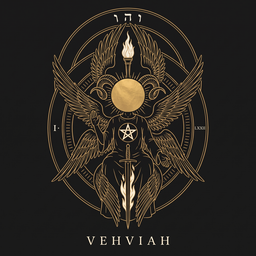
 Ars Occulta
 / Ars Goetia / Naberius
24 / 72
Naberius
Cerberus, Naberus
- Rank
- Marquis
- Planet
- ☽Moon
- Legions
- 19

It is Johann Weyer, in 1577, who identifies Naberius with Cerberus, the guard dog of the Greek underworld - «Naberius, alias Cerberus»; the Lemegeton never mentions Cerberus at all and only describes him as a black crow fluttering about the circle and speaking in a hoarse voice. He is a most valiant Marquis, a lunar grade, with nineteen legions, among the lowest figures in the catalogue. He is sought for cunning in the arts and sciences, rhetoric in particular, and for one very social function: restoring lost dignities and honours. Whoever called him had usually fallen from favour and wanted his place back, not money or new power.
What he was asked for
The words in the text are «prelacies and dignities», and both are the vocabulary of ecclesiastical office: a benefice, a post, a named authority. What is at stake is not abstract power, it is recovering a position somebody lost.
Add the rhetoric and the petitioner draws himself: a cleric or a lawyer stripped of his office. In the Europe of the wars of religion, losing a benefice for backing the wrong side was routine, not exceptional misfortune.
The power that inverts
Here is the cleanest contradiction in the whole catalogue. In Weyer, 1577, Naberius procures the loss of prelacies and dignities. In the Lemegeton, copied later, he restores them. One takes them away and the other gives them back. Depending on which manuscript you open, he is the cause of your fall or the remedy.
And that is not the only swing. Mathers' Lemegeton describes him as a black crane; the Sloane 2731 manuscript and Weyer say crow. The crane arrives with the 1904 edition.
Crane or crow, and why it matters
The two birds mean different things, so the copying error changes the character. The crane, in Pliny and in Isidore, is the sentinel: the watchers of the flock hold a stone in one claw, and if sleep takes them the stone falls and convicts them. The same authors add that cranes turn black as they age. A black crane, then, is not just a dark bird: it is the oldest sentinel. Vigilance was so ordinary an emblem that Alciato devotes a whole one to it, titled «Vigilance and protection».
The crow says something else. Isidore reports that it goes for the eyes of a corpse before any other part; Pliny counts it among the few birds that understand what they announce in auguries. Carrion and omen. And the hoarse voice the text gives him fits the crow, not the crane.
On Cerberus: only Weyer calls him «Naberius, alias Cerberus». The Lemegeton never mentions Cerberus at all. The three-headed dog he is drawn as today came later, dragged in by that nickname.
Sources
- Lemegeton Clavicula Salomonis · Ars Goetia — ms. Sloane 2731 y edición Mathers, 1904
- Johann Weyer, Pseudomonarchia Daemonum, 1577 — «Naberius, alias Cerberus»
- Reginald Scot, The Discoverie of Witchcraft, 1584
- Plinio el Viejo, Naturalis Historia, siglo I — grulla y cuervo
- Isidoro de Sevilla, Etymologiae, siglo VII — grulla y cuervo
- Andrea Alciato, Emblemata, emblema 15 «Vigilantia & custodia», edición de Amberes, 1608
Other marquises of the Goetia
The hyperrealistic reconstruction of Naberius and those of the other 143 entities are published on Instagram as they are completed. See Naberius on Instagram →
WarningHistorical and artistic content. We do not recommend performing any ritual, invocation or practice involving these entities. This is outreach about texts from the 15th to the 20th century, not an operative guide.