 Ars Occulta
 / Ars Goetia / Amon
07 / 72
Amon
Aamon
- Rank
- Marquis
- Planet
- ☽Moon
- Legions
- 40

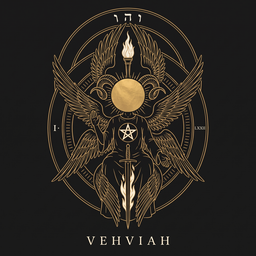
He is often linked to Amun, the great Egyptian deity of Thebes, though the connection is the conjecture of modern commentators and not something the grimoire asserts. A Marquis of great power, a rank the text associates with the Moon, with 40 legions. He arrives as a wolf with a serpent's tail spewing fire and, when compelled, takes human form with a raven's head and dog's teeth. His practical use was social rather than martial: to tell past and future, to procure love and, above all, to reconcile friends who have fallen out. In a catalogue full of spirits of war and wealth, his is a trade of mediation.
What he was asked for
His three offices are to tell past and future, to procure favour and to reconcile those at odds. It sounds minor beside the spirits of war and gold that fill the catalogue, and it is exactly the reverse: in a society where access to a lord or to the court decided what you ate, and where feuds between families lasted generations, securing favour and closing a quarrel were the two things that actually changed a life.
There is a contradiction here worth looking at. Weyer, in 1577, says he procures favour and reconciles friends and foes. The Lemegeton, copied later, says he procures feuds. Depending on which manuscript you read, Amon is the mediator or the one who lights the quarrel.
The bird that was never a raven
In human form he is described with dog's teeth and a raven's head. Except the original does not say raven. Weyer writes, in Latin, nycticorax — literally «night raven», which in the vocabulary of the period is not a corvid but a night heron. The English translation turned it into raven, and from there it jumped into the Lemegeton and into every later illustration. Amon's raven head is a copying error that has been fossilised for four centuries.
The wolf, however, is a wolf, and it is not a gentle image. Werewolf trials begin in fifteenth-century Switzerland, spread across Europe in the sixteenth and peak precisely in the seventeenth. France tried several dozen cases in the late sixteenth century, with famous ones such as Gilles Garnier in 1573 and Peter Stumpp in 1589; in Livonia the werewolf trial became the most common form of witchcraft trial. To a reader in 1600, a wolf-shaped demon was not a metaphor for greed: it was the shape the courts were condemning that very year.
The serpent's tail finishes the sentence. A wolf that also poisons.
Where the sources disagree
Even his place on the list changes: fifth in Weyer and in Scot, seventh in the Lemegeton. Between one version and the other the catalogue was reordered and an entire spirit vanished — Pruflas, who stood fourth in Weyer.
Weyer also calls him «the strongest prince of all», a title the Lemegeton erases and replaces with «most stern». The forty legions, by contrast, are among the steadiest figures in the catalogue: Weyer, Scot, the Lemegeton and the Dictionnaire Infernal all repeat them without argument.
Sources
- Lemegeton Clavicula Salomonis · Ars Goetia — manuscritos del siglo XVII (ed. Mathers y Crowley, 1904)
- Johann Weyer, Pseudomonarchia Daemonum, 1577 — texto latino, «nycticorax»
- Reginald Scot, The Discoverie of Witchcraft, 1584 — traducción inglesa del texto de Weyer
- Collin de Plancy, Dictionnaire Infernal, 6ª edición ilustrada por Louis Le Breton, 1863
- Procesos por licantropía: Gilles Garnier (Dole, 1573) y Peter Stumpp (1589)
Other marquises of the Goetia
The hyperrealistic reconstruction of Amon and those of the other 143 entities are published on Instagram as they are completed. See Amon on Instagram →
WarningHistorical and artistic content. We do not recommend performing any ritual, invocation or practice involving these entities. This is outreach about texts from the 15th to the 20th century, not an operative guide.