 Ars Occulta
 / Ars Goetia / Beleth
13 / 72
Beleth
Bileth, Byleth
- Rank
- King
- Planet
- ☉Sun
- Legions
- 85

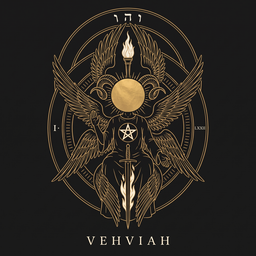
A mighty and terrible King with 85 legions; the royal rank ties him to the Sun and to command over other spirits. His name also circulates as Bileth and Byleth, with no settled etymology. He appears as a rider on a pale horse, preceded by trumpets and strident music, an image that echoes the fourth horseman of the Apocalypse though the text establishes no such filiation. Here the operative warning is explicit: he arrives furious, and the manuscript orders the conjurer to receive him with a hazel wand in hand, force him into the triangle and hold firm until he obeys. His sole office is to procure love until the summoner is satisfied.
The entry with the most fine print
No other spirit comes with this many instructions. He arrives furious, and the text spells out how to calm him: hold a hazel wand with the arm stretched out toward the south and the east, draw a triangle outside the circle, and command him into it.
Then comes the opposite part: once he is inside, he must be received courteously and done homage to, as the kings and princes who attend him do. First you force him, then you address him formally.
And you must always wear a silver ring on the middle finger of the left hand, held against your face. The text does not explain why; it only says this is how it is done with Amaymon.
The hazel wand and the pale horse
The hazel wand is not a loose detail. The Key of Solomon calls for a virgin hazel wand, of one year's growth only; the Sworn Book of Honorius allows laurel or hazel, also of one year; Weyer's Latin says baculum coruli, a hazel staff. Hazel is also the wood of the dowsing rod, the one used to find water and buried metal. Virgin branch and hazel together give the instrument that detects what is hidden and forces it out.
The pale horse is not a colour either. It is a literal quotation from Revelation: equus pallidus, and the one who sits on it is named Death. To a reader in 1600 that mount comes with a proper name.
The trumpets and instruments that precede him are the form of a royal entry. The text itself confirms it when it orders homage paid to him as to a king with his court.
What the Lemegeton deleted from Weyer
Comparing the two versions is instructive, because the older one carries three things the later one removes.
First: Weyer allows a substitute. If the place is unfit for a triangle to be made outside the circle, he says, set a bowl of wine there instead. The Lemegeton does not carry it over.
Second: Weyer warns what happens if you fail. If the king turns stubborn and the conjurer shows himself fearful, or has not the chain of spirits, then the spirit will never fear nor regard him again. Once is enough to be burned for good.
Third, and most interesting: Weyer writes that Beleth is of the order of Powers and hopes to return to the seventh throne, «which is not altogether credible». The Lemegeton keeps the order and deletes the doubt. Weyer was publishing the catalogue to show it was nonsense, and later copyists went on stripping precisely that out of the text.
The rest agrees: eighty-five legions and the rank of king in all three sources. And on the name, the only documented thing is the shift from Byleth and Bileth in Weyer and Scot to Beleth in the Lemegeton. Kinship with Baal is plausible from the Semitic root, but no period source asserts it.
Sources
- Lemegeton Clavicula Salomonis · Ars Goetia — ms. Sloane 3825 y 2731, ed. Peterson
- Johann Weyer, Pseudomonarchia Daemonum, 1577 — «Byleth», el cuenco de vino, el séptimo trono
- Reginald Scot, The Discoverie of Witchcraft, 1584 — «Bileth»
- Clavicula Salomonis, libro II capítulo 8 — la vara de avellano virgen
- Libro Jurado de Honorio, capítulo CXXXII
- Apocalipsis 6:8, Vulgata — «equus pallidus»
Other kings of the Goetia
The hyperrealistic reconstruction of Beleth and those of the other 143 entities are published on Instagram as they are completed. See Beleth on Instagram →
WarningHistorical and artistic content. We do not recommend performing any ritual, invocation or practice involving these entities. This is outreach about texts from the 15th to the 20th century, not an operative guide.