 Ars Occulta
 / Ars Goetia / Paimon
09 / 72
Paimon
Paymon, Paimonia
- Rank
- King
- Planet
- ☉Sun
- Legions
- 200

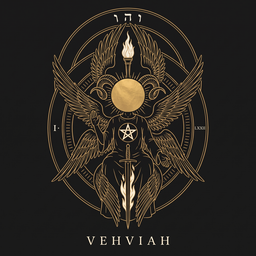
One of the most powerful spirits in the catalogue: 200 legions, the highest figure in this first stretch, and the title of Great King, a solar rank implying command over other spirits. No established etymology of the name exists. The manuscript insists on protocol: he arrives on a dromedary wearing a resplendent crown, preceded by trumpets and cymbals, and speaks in a loud, confused voice that the operator must compel him to make plain. He was asked for instruction in all arts and sciences, the revelation of secrets, dignities, and the binding of other people's wills. His name returned to wide circulation thanks to contemporary horror cinema, notably the film Hereditary.
Nobody agrees on where he is
The manuscript insists you must face a particular direction when calling him, and every copy points somewhere else. Weyer, in 1577, says north. The Sloane 2731 manuscript says north-west. Mathers' 1904 edition says west. And the Livre des Esperitz, the Liber Officiorum Spirituum and the Clavis Inferni make him outright king of the west.
The legions move the same way: two hundred in Weyer, in the Lemegeton and in the Dictionnaire Infernal; twenty-five in the Livre des Esperitz. For a detail the text itself presents as essential, that is a great deal of disagreement.
There is another point rarely repeated: Weyer gives him a woman's face, vultu fœmineo. The Lemegeton does not mention the face at all.
The dromedary does not mean humility
He arrives seated on a dromedary, and it should not be confused with the camel. The camel, in Isidore of Seville, kneels to be loaded, and hence its reading as the animal of humility. The dromedary is something else: Isidore defines it as the swift camel, good for a hundred miles a day, and Bartholomaeus Anglicus raises the figure to a hundred and twenty. Jacques de Vitry describes it as the mount of couriers.
To a reader in 1600, a dromedary means speed and the East. A king who arrives fast and from far away, preceded by trumpets and cymbals, like a royal entry.
About the film
A great many people reach this name through Hereditary, from 2018. It is worth saying plainly what the film took: the name, the crown and the rank of king. Nothing else.
The Paimon of the manuscript has no cult, seeks no body, and has nothing to do with a family or a grandmother. He teaches arts and sciences, explains what the earth is and what holds it up in the waters, grants offices and hands over familiar spirits. And the Hebrew etymology sometimes quoted for the name — pa'amon, «little bell» — is a proposal made by Mathers in 1904, not an attested fact.
Sources
- Lemegeton Clavicula Salomonis · Ars Goetia — ms. Sloane 2731 y edición Mathers, 1904
- Johann Weyer, Pseudomonarchia Daemonum, 1577 — «Aquilonem versus», «vultu fœmineo»
- Livre des Esperitz, siglos XV-XVI — Poymon, 25 legiones
- Liber Officiorum Spirituum, versión de John Porter, 1583
- Isidoro de Sevilla, Etymologiae XII.1.35-36 — camello y dromedario
- Bartolomé Ánglico, De proprietatibus rerum, siglo XIII
- Jacques de Vitry, Historia Hierosolymitana, c. 1220
Other kings of the Goetia
The hyperrealistic reconstruction of Paimon and those of the other 143 entities are published on Instagram as they are completed. See Paimon on Instagram →
WarningHistorical and artistic content. We do not recommend performing any ritual, invocation or practice involving these entities. This is outreach about texts from the 15th to the 20th century, not an operative guide.