 Ars Occulta
 / Ars Goetia / Belial
68 / 72
Belial
Beliall
- Rank
- King
- Planet
- ☉Sun
- Legions
- 80

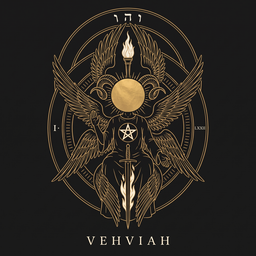
Belial's name is the oldest in this stretch: in the Hebrew Bible beli-ya'al appears as a common noun meaning "without worth", whence expressions such as "sons of Belial"; in Second Temple literature and in the Second Letter to the Corinthians it already functions as a proper name. The grimoire makes him a King, a solar grade with command over other spirits, and assigns him eighty legions, among the highest figures in the catalogue. He manifests as two exceedingly beautiful angels in a chariot of fire and speaks with a pleasant voice. He was asked for offices and favours; the text warns that he demands offerings.
For a thousand years he was nobody
In the Hebrew Bible, beliyya'al is not a character: it is a common noun meaning something like «worthless», «of no profit». It appears twenty-seven times, fifteen of them inside the phrase «sons of Belial», which names no demon at all: it simply means worthless men. The men of Gibeah, the sons of Eli, Nabal, Shimei. These are insults, not genealogies.
The character is born in the Dead Sea Scrolls, between the second century BC and the first AD. In the Community Rule he is already someone you can harbour in your heart or not. In the War Scroll he is the angel of enmity, his dominion in darkness, and the Sons of Light form up against his army. The Damascus Document speaks of his «three nets»: fornication, wealth and defilement of the sanctuary.
From there he passes into the New Testament, where Paul asks what concord Christ has with Belial. And from there, fifteen centuries later, into Weyer's list as the proper name of a king. The bridge between one and the other is documented nowhere.
The only one you have to pay
He has a protocol no other entry in the catalogue has: he demands offerings, sacrifices and gifts, and the text warns that without them he gives no true answers. Seventy-two spirits and only one charges up front.
What he gives in return is in Weyer's Latin, and it is very concrete: prelacies and senatorships — church offices and civil offices — the favour of friends and of foes, and good familiar spirits. He is not the demon of knowledge or of love: he is the demon of institutional advancement.
He arrives in a chariot of fire, the vehicle in which the prophet Elijah is taken up to heaven in the second book of Kings. An infernal king entering in the chariot of the righteous ascent, beautiful and pleasant of voice. Paul's warning about Satan disguised as an angel of light is one line away.
One angel or two, eighty legions or fifty
Mathers' 1904 edition describes him as two beautiful angels seated in a chariot of fire. Weyer and the Sloane 2731 manuscript say one. Somewhere in the copying he was doubled.
And in that same edition he loses thirty legions: Weyer and the Sloane give him eighty, Mathers fifty. Since almost everything published today descends from Mathers, both figures circulate side by side and nobody reconciles them.
On his origin there are two versions as well: the manuscript says he was created immediately after Lucifer and belongs to his order; Weyer says his legions come partly from the Virtues and partly from the Angels.
Sources
- Lemegeton Clavicula Salomonis · Ars Goetia — ms. Sloane 2731 y edición Mathers, 1904
- Johann Weyer, Pseudomonarchia Daemonum, 1577 — «octoginta legionum», prelaturas y senadurías
- Biblia hebrea — 27 apariciones de beliyya'al; 2 Corintios 6:15; 2 Reyes 2:11
- Rollos del Mar Muerto — Regla de la Comunidad (1QS), Regla de la Guerra (1QM), Documento de Damasco (CD)
Other kings of the Goetia
The hyperrealistic reconstruction of Belial and those of the other 143 entities are published on Instagram as they are completed. See Belial on Instagram →
WarningHistorical and artistic content. We do not recommend performing any ritual, invocation or practice involving these entities. This is outreach about texts from the 15th to the 20th century, not an operative guide.