 Ars Occulta
 / Ars Goetia / Marbas
05 / 72
Marbas
Barbas
- Rank
- President
- Planet
- ☿Mercury
- Legions
- 36

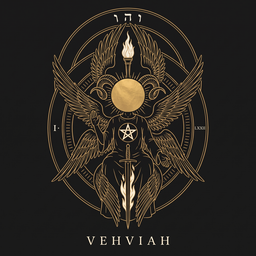
Fifth in the order, also called Barbas. He governs 36 legions, and his rank, that of President, corresponds to Mercury: the mercurial spirit of the catalogue is the one who teaches, explains and transforms. He manifests as a great lion and takes the shape of a man only when so commanded. What the operator asked of him was technical: true answers on hidden matters, knowledge of mechanics and manual trades and, above all, health, since the text credits him with both causing and curing diseases - one and the same knowledge turned in two directions. He also changes the shape of men, a competence he shares with very few.
He sickens and he cures
The text says it in the same breath and without blinking: he causes diseases and cures them again. Both halves of the business in a single line.
It is not a rhetorical oddity. In an age with no germ theory, illness that arrived suddenly was read as something someone had sent, and the same specialist who knew how to send it was the one who knew how to lift it. The grimoire is not describing a physician: it is describing whoever holds the key from both sides.
The other thing he gives is knowledge of the mechanical arts. That needs translating properly: in Weyer's English it is handicrafts. Not engineering — the knowledge of the guild.
Asking or commanding
He appears first as a great lion and afterwards takes human shape. The difference between the sources is who decides that change.
The Lemegeton says he takes human shape «at the request of the master». Weyer, in 1577, says he does it «at the commandment of a conjuror». Asking and commanding are not the same, and in a text whose entire subject is who commands whom, one word reorders the scene.
Weyer also calls him a most powerful lion, leonis fortissimi; the Lemegeton settles for «great lion».
Where the sources disagree
The thirty-six legions and the rank of president agree in Weyer, in Scot and in the Lemegeton.
What is lost is the double name. Weyer writes «Marbas, alias Barbas», and the Lemegeton deletes the alias. In the older Livre des Esperitz there is a Barbas, but ranked prince, not president.
Of etymology there is nothing. The derivations in circulation — from the Latin barba, from Persian roots — are modern proposals with no period source behind them. The only firm thing is the Marbas/Barbas pair, consistent with a scribal confusion of M and B.
Sources
- Lemegeton Clavicula Salomonis · Ars Goetia — ms. Sloane 3825 y 2731, ed. Peterson
- Johann Weyer, Pseudomonarchia Daemonum, 1577 — «Marbas, alias Barbas», «leonis fortissimi»
- Reginald Scot, The Discoverie of Witchcraft, 1584
- Livre des Esperitz, siglos XV-XVI — «Barbas», príncipe
Other presidents of the Goetia
The hyperrealistic reconstruction of Marbas and those of the other 143 entities are published on Instagram as they are completed. See Marbas on Instagram →
WarningHistorical and artistic content. We do not recommend performing any ritual, invocation or practice involving these entities. This is outreach about texts from the 15th to the 20th century, not an operative guide.